
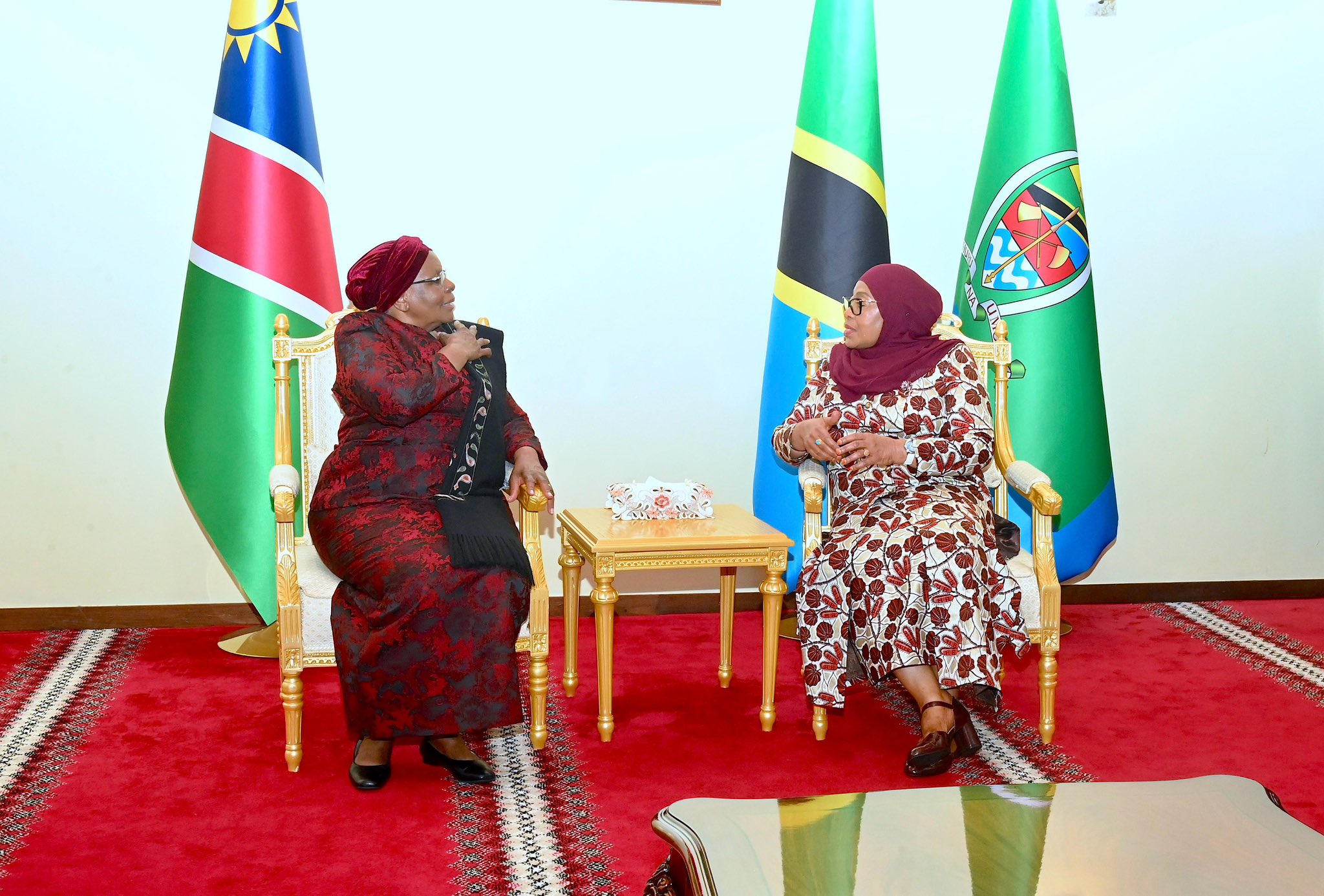
Dar es Salaam. More than three decades after Namibia attained independence and over six decades since Tanzania emerged as a frontline state in Africa’s liberation struggles, the leaders of the two nations believe a new battle must now be fought: the battle for economic liberation. That message dominated Namibian President Dr. Netumbo Nandi-Ndaitwah’s three-day State Visit to Tanzania, where she and President Samia Suluhu Hassan stressed that the historical ties forged during the struggle against colonialism and apartheid must now be translated into jobs, investments, trade, and prosperity for ordinary citizens.
“We have spoken a lot about our historical relationship; now it is time for that relationship to bring economic benefits to all of us,” President Hassan said after bilateral talks at State House in Dar es Salaam. Her remarks reflected a shared commitment to transform a relationship built on political solidarity into one driven by economic opportunity. While the two countries enjoy strong diplomatic ties dating back to the liberation era, both leaders acknowledged that economic cooperation has lagged behind.
President Hassan noted that bilateral trade between Tanzania and Namibia stood at approximately Sh20 billion in 2024, a figure far below the two economies’ potential. President Nandi-Ndaitwah said the changing global environment requires African countries to strengthen economic partnerships, arguing that the success of bilateral relations should be measured not by agreements signed but by the investments, businesses, and jobs created. “We must move from opportunities to production, from discussions to action, and build partnerships that create jobs and development for our people,” she told investors at the Tanzania-Namibia Business and Investment Forum.
The leaders’ call comes at a time when African countries face mounting economic pressures, including rising youth unemployment, global trade uncertainties, and growing competition for investment. President Hassan argued that Africa possesses all the ingredients necessary for growth, including a youthful population, abundant natural resources and fertile land, but stressed that greater cooperation among African nations is essential. The two countries identified trade, agriculture, livestock, fisheries, mining, tourism, aviation, health, education, oil and gas, and the blue economy as priority areas for collaboration.
A practical example of this new economic direction emerged during the business forum through the signing of a five-year partnership agreement involving Tanzania’s Kijiji Cha Nyuki Company Limited, Namibia’s Nknongo Community College, and Apimondia, the global federation of beekeepers’ associations. The initiative aims to establish Namibia’s first apiculture research and training institute and to create employment opportunities through sustainable beekeeping, tourism, and skills development, particularly for women, youth, indigenous communities, and persons with disabilities.
For both governments, the beekeeping partnership symbolizes the broader goal of turning historic friendship into shared prosperity. As Tanzania and Namibia seek to redefine their relationship for a new era, the message from Dar es Salaam was clear: the solidarity that once secured political freedom must now be harnessed to deliver economic transformation and improve the lives of ordinary citizens.