
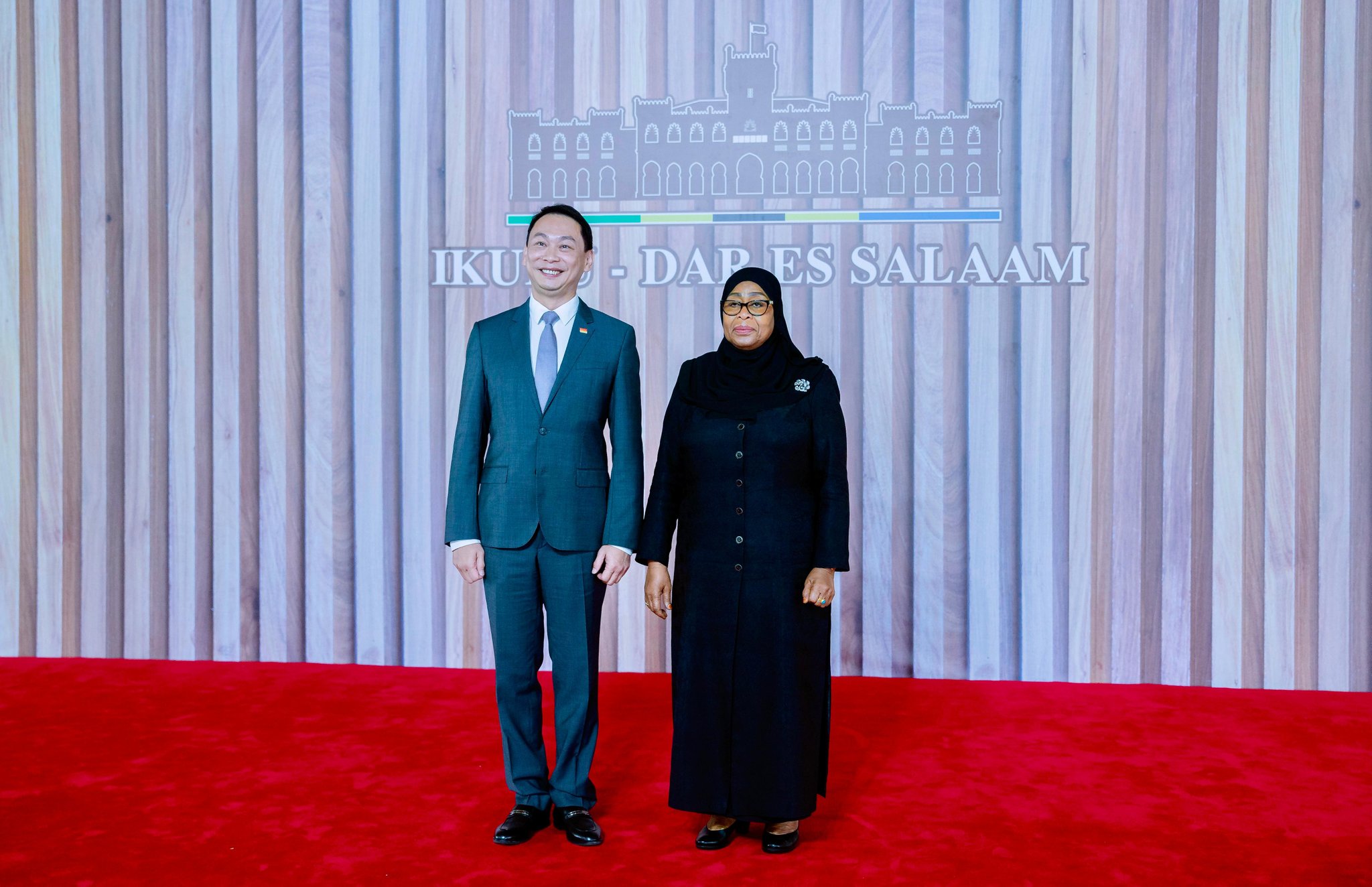
Tanzania and Singapore have pledged to deepen bilateral cooperation in technology and economic development, building upon decades of diplomatic relations. The commitment came during high-level talks between President Samia Suluhu Hassan and Singapore’s envoy Douglas Foo at the State House in Dar es Salaam on February 27, 2026.
The discussions focused on expanding collaboration across multiple sectors, including technology, education, health, and infrastructure development. Both nations emphasized the strategic importance of strengthening their partnership amid rapidly evolving global economic landscapes.
“Tanzania values its relationship with Singapore and sees significant potential in learning from Singapore’s technological advancement and economic success,” a source close to the discussions revealed.
The meeting comes at a crucial time as Tanzania continues to position itself as a regional hub for trade and transportation in East Africa. Singapore, known for its world-class infrastructure and technological innovation, could provide valuable expertise to support Tanzania’s development goals.
Singapore has emerged as one of Asia’s leading technology and financial centers, with particular strengths in digital infrastructure, smart city solutions, and maritime logistics. These are areas where Tanzania has expressed keen interest in developing further capacity.
For Tanzania, the enhanced cooperation represents an opportunity to attract investment and technical knowledge in key growth sectors. The East African nation has been implementing various economic reforms under President Hassan’s administration to create a more business-friendly environment and accelerate development.
Economic analysts note that the partnership could significantly benefit Tanzania’s burgeoning technology ecosystem. “Singapore’s experience in creating an innovation-friendly regulatory framework could serve as a model for Tanzania as it seeks to develop its digital economy,” said Dr. Emmanuel Materu, an economics professor at the University of Dar es Salaam.
Education was another focal point of the discussions, with both sides exploring opportunities for academic exchanges and capacity-building programs. Singapore’s world-renowned educational institutions could provide valuable training for Tanzanian professionals in various fields.
In the health sector, potential areas for collaboration include medical technology, healthcare management systems, and pharmaceutical development. Tanzania has been working to strengthen its healthcare infrastructure, particularly following lessons learned during global health challenges.
The diplomatic relationship between Tanzania and Singapore dates back several decades, though economic ties have remained relatively modest. This renewed commitment signals a potential turning point in bilateral relations, with both countries showing interest in more substantive engagement.
Singapore’s diplomatic outreach to Tanzania aligns with its broader strategy of diversifying economic partnerships beyond traditional markets, particularly in the rapidly growing African continent. For Singapore, Tanzania represents an attractive gateway to the East African Community, a regional bloc with a combined population of over 177 million people.
Trade between the two nations has been limited but has potential for growth. Tanzania primarily exports agricultural products and minerals to Singapore, while importing manufactured goods, chemicals, and technology.
Government officials indicated that follow-up meetings would be scheduled to develop specific cooperation frameworks and identify priority projects. A joint working group may be established to coordinate initiatives across the various sectors discussed.
As both countries navigate post-pandemic economic recovery and global uncertainties, this strengthened partnership could provide mutual benefits through diversified trade, knowledge transfer, and shared development goals.