[pdf-embedder url=”http://nchibora.com/wp-content/uploads/2026/05/sw-1778754714-Hotuba_ya_Bajeti_ya_Wizara_ya_Mifugo_na_Uvuvi_kwa_Mwaka_wa_Fedha_2026_2027.pdf”]


[pdf-embedder url=”http://nchibora.com/wp-content/uploads/2026/05/sw-1778754714-Hotuba_ya_Bajeti_ya_Wizara_ya_Mifugo_na_Uvuvi_kwa_Mwaka_wa_Fedha_2026_2027.pdf”]
[pdf-embedder url=”http://nchibora.com/wp-content/uploads/2026/05/sw-1778662655-MPYA-HOTUBA.pdf” title=”sw-1778662655-MPYA -HOTUBA”]

Air Tanzania has announced its plans to launch direct flights between the UK and Tanzania from July 2027
“We will be flying direct from London Gatwick to Kilimanjaro International Airport from July 2027,” was the pledge announced by Peter Ulanga, the CEO of Air Tanzania.
Ulanga stated that Air Tanzania (‘The Wings of Kilimanjaro’) will schedule a minimum of three flights per week, and whilst accepting that business as well as F&F (Tanzanian nationals visiting Family and Friends) categories will be of great importance, the key sales driver will be tourism to Tanzania and Zanzibar.
“We will also run direct flights to Zanzibar, expanding the tourism potential of that destination from the UK, too,” added CEO Ulanga.
Acknowledging the challenges faced by airlines wanting to introduce new routes, he stated that he was confident that they would be ready well ahead of time, but were choosing not to overpromise. Instead, a comprehensive and well-developed activity plan was already being implemented.

Dar es Salaam: The Tanzania Ports Authority (TPA) has reduced the Port Infrastructure Development Levy (PID) from nine percent to 4.5 percent of customs duty following concerns from traders and logistics stakeholders over rising import costs. The decision comes even as the authority accelerates a Sh16.1 trillion port expansion programme.
TPA Director of Marketing and Communications, Dr George Fasha, said the revision followed extensive consultations held between October and December 2025 with importers, clearing agents, transporters and other stakeholders. The discussions focused on fears that the original levy would significantly increase the cost of doing business when combined with other charges.
According to Dr Fasha, the new rate seeks to strike a balance between easing the burden on traders and ensuring continued investment in critical port infrastructure. Despite the reduction, the levy will remain a key funding source for the country’s ambitious plan to modernise and expand its port network.
TPA plans to invest Sh16.1 trillion in upgrading facilities across Dar es Salaam, Tanga and Mtwara ports, as well as inland dry ports. Of this, Sh11.2 trillion will be financed internally, while Sh4.9 trillion is expected from private sector participation through Public-Private Partnerships.
The investment push comes amid a sharp rise in cargo volumes, with Tanzania’s ports handling 29.6 million tonnes between July 2025 and March 2026. Container traffic has already surpassed one million TEUs within nine months, highlighting growing regional trade activity but also exposing serious capacity constraints, including vessel delays and increased road congestion.
To address these challenges, TPA is implementing multiple expansion projects, including new berths at Dar es Salaam Port, dry ports in key locations, and new facilities in Tanga and Mtwara. Authorities warn that without timely infrastructure investment, ports could become a major bottleneck as cargo volumes are projected to nearly double to 62 million tonnes by 2030/31.

Dar es Salaam: Tanzania has announced plans to construct a new specialised and super-specialised national hospital at a cost of Sh1.2 trillion, marking one of the largest healthcare infrastructure investments in the country’s history.
The project aims to expand access to advanced medical services, including organ transplants, cancer treatment, cardiac care, neurology, and kidney disease management, while also positioning Tanzania as a regional hub for medical tourism.
The proposed facility is expected to ease pressure on the existing Muhimbili National Hospital, which continues to serve as the country’s main referral centre despite facing challenges related to ageing infrastructure, scattered buildings and limited capacity to support modern technologies.
Presenting the 2026/2027 health budget in Parliament, Health Minister Mohamed Mchengerwa said the decision followed a comprehensive assessment of service delivery challenges, adding that the new hospital would meet international standards and serve both local and foreign patients.
Lawmakers across political lines welcomed the initiative, describing it as a long-overdue investment, though some called for greater transparency in the use of funds. They emphasised the need for a detailed financial breakdown to ensure accountability in what is seen as a major national undertaking.
The project, expected to be implemented over five years, will be financed through a mix of concessional loans and government contributions. Authorities say it will reduce overseas medical referrals, improve healthcare efficiency, and contribute to foreign exchange earnings by attracting patients from across the region.

Dar es Salaam: Tanzanian households are increasingly shifting money from traditional savings accounts into bonds, mutual funds and other formal investment products, pushing the value of household financial assets to Sh28.77 trillion by the end of 2025.
The figure marks an increase from Sh27.52 trillion recorded in 2024, driven largely by stronger participation in government securities, collective investment schemes and other formal investment products, according to the latest Financial Stability Report released by the Bank of Tanzania (BoT).
Treasury bonds recorded the sharpest growth, with household holdings surging by 115.9 percent to Sh1.44 trillion in 2025 from Sh665.4 billion a year earlier.
Investments in collective investment schemes also rose strongly by 52.9 percent to Sh2.72 trillion from Sh1.78 trillion, while corporate bond investments nearly doubled to Sh612 billion from Sh306.6 billion.
In contrast, household deposits, which still account for the largest share of financial assets, declined by 4.46 percent to Sh22.15 trillion from Sh23.18 trillion, suggesting households are reallocating funds towards higher-yield investment instruments.
The central bank said the increase in household financial assets has strengthened household balance sheets and improved creditworthiness, enabling families to better service debt obligations while expanding collateral available for borrowing.
Analysts attribute the shift to a combination of economic pressure, growing financial awareness and expanding access to investment products.
SSC Capital chief executive officer, Salum Awadh, said many Tanzanians are entering investment markets partly because they observe others doing the same, even when they may not have clearly defined financial goals.
“Most invest through herd behaviour. They invest because they see other people investing, but many do not necessarily link investments to specific financial objectives,” he said.
However, he noted that a growing number of households are now investing deliberately for retirement planning, emergency preparedness and long-term wealth creation.
Mr. Awadh said rising household investment could have broader implications for Tanzania’s economic development because savings and investments remain critical for capital formation.
“For the economy to grow, we must strengthen capital formation, and savings and investments contribute significantly to that process. Banks and investment issuers can use these funds to finance socio-economic development,” he said.
He added that higher investment income could gradually stimulate private sector activity through increased consumer spending. “Economic growth is still largely driven by public expenditure, especially in infrastructure, housing and energy projects.
Increased household investment income can strengthen private consumption and support wider economic activity,” he said.
According to him, rising household wealth could also boost demand for housing, healthcare, education and food services, creating opportunities for private sector expansion.
The trend comes as Tanzania’s financial sector becomes increasingly diversified and accessible.
Over recent years, regulators and financial institutions have widened retail access to government securities, unit trusts and digital investment platforms, reducing barriers that previously limited participation to institutional or wealthy investors.
Mobile-based financial services have also expanded access to formal financial products, particularly among younger and first-time investors.
Yusra Sukuk Company Ltd chief executive officer Sheikh Mohamed Issa said households are increasingly turning to formal investment products not only for wealth creation, but also for income protection and financial security. “It is both income protection and survival.
Many households do not have the skills or capacity to create wealth independently, and they are generally risk-averse,” he said. As a result, he noted, households are increasingly relying on capital market products and wealth management institutions to secure stable income streams and preserve the value of their money.
“This trend contributes to financial deepening and financial inclusion, which are key goals under the national financial inclusion strategy,” he said.
Exodus Advisory chief executive officer Ramadhani Kagwandi said the rapid growth of money market and unit trust funds reflects efforts by households to balance long-term wealth creation with short-term financial resilience.
“All three factors are influencing household investment behaviour in Tanzania, though wealth creation appears to be the primary driver, especially among the growing middle class and financially aware population,” he said.
“At the same time, many households are also investing for income protection and financial security due to economic uncertainty and the need to prepare for unforeseen circumstances.”
Mr. Kagwandi said the trend reflects improving financial inclusion, rising financial literacy and growing awareness of formal investment opportunities.
“More households are moving funds from idle savings into structured financial assets that offer better returns while still managing risk appropriately,” he said.
He added that the reallocation of household funds into investment products improves efficiency within the financial system by allowing capital to be channelled into lending and infrastructure.
Financing and productive investment.
Economists say the transition could gradually help Tanzania reduce dependence on external financing by strengthening domestic savings mobilization.
However, analysts cautioned that the shift also presents policy challenges.
Mr. Kagwandi warned that authorities would need to carefully manage liquidity conditions and interest rate dynamics to avoid excessive government borrowing crowding out private sector credit.
“If government securities continue offering attractive returns under tight monetary conditions, banks and investors may prefer lending to the government instead of financing private businesses,” he said.
He warned that such a scenario could eventually slow investment in productive sectors such as manufacturing, agriculture and small enterprises.
Islamic finance consultant Abdallah Ndele said the shift reflects growing public awareness and wider access to investment opportunities in Tanzania.
“Previously, most households only viewed banks as places to save and invest money, but social media has significantly expanded financial awareness and understanding,” he said.
“What can be observed is that many are investing mainly for wealth creation and protection, which explains why Treasury bonds are attracting more funds than corporate bonds.”
Analysts also stressed the need for stronger financial literacy and investor education as retail investment participation expands.

[pdf-embedder url=”http://nchibora.com/wp-content/uploads/2026/05/HOTUBA-YA-WIZARA-YA-AFYA-KWA-MWAKA-2026-2027.pdf” title=”HOTUBA YA WIZARA YA AFYA KWA MWAKA 2026-2027″]
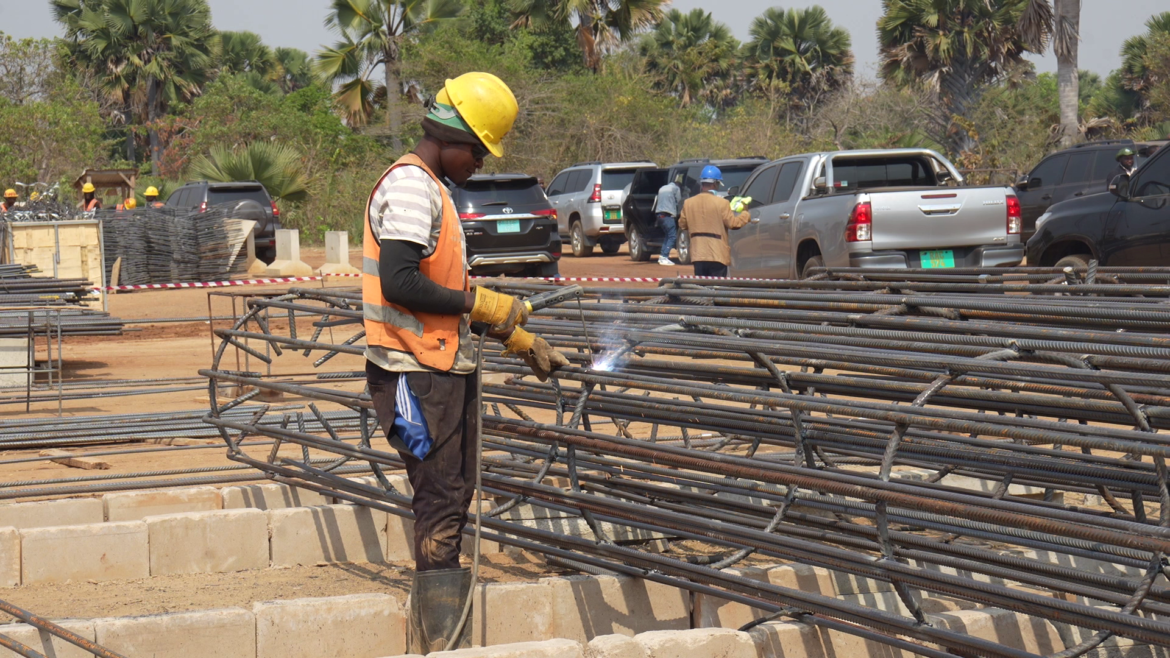
Construction of the extension of the standard gauge railway (SGR) from Makutopora to Isaka recently got a shot in the arm when the government secured a substantial loan to continue with the strategic project implementation.
A bulletin on the website of the Standard and Chartered Bank (UK) of April 28, 2026, had it that: “Standard Chartered arranges $2.33 billion syndicated financing for landmark SGR railway project in Tanzania”.
The bulletin went on: “The financing for SGR Lots 3 and 4 comprises of $1.32 billion Export Credit Agency (ECA) financing signed in 2025 and 2026, and $462 million of long-term financing from commercial banks and Development Finance Institutions, signed in 2023.
Standard Chartered acted as Sole Global Coordinator, Bookrunner, Mandated Lead Arranger, Facility Agent, and Lender for the Ministry of Finance of the United Republic of Tanzania. The ECA facilities are comprised of support from EKN and SEK (of Sweden), KUKE (of Poland), and SACE (of Italy) as the fronting ECAs, with reinsurance from two more ECAs.
The financing for SGR Lot 5 comprises a $559 million Sinosure (the Export Credit Agency of China) Covered Facility, which was drawn in 2025. Standard Chartered acted as Sole Global Coordinator, Bookrunner, Mandated Lead Arranger, Facility Agent, and Lender for the Ministry of Finance of the United Republic of Tanzania.
So, what is syndicated financing? Who are the parties involved? Why go for syndicated loans (instead of, for example, bilateral loans)? Answers to these questions will be useful to all those interested in the intricacies of infrastructure finance, including those studying real estate finance and economics, whose course syllabus includes a subject titled: “Financing Infrastructure Development”.
Syndicated finance involves a group of lenders (collectively called “a syndicate”) coming together to provide a single, large loan to a borrower, managed by lead arrangers.
So, already here we can see that we have three parties: The borrower (the entity receiving the funds); the lenders (the syndicate, that is, the banks providing portions of the loan), and the arrangers (Lead Arranger/Mandated Lead Arranger (MLA), which would be the Structuring bank.
Normally, there is also an Agent or Facility Agent who manages the loan, repayments, and communications between the borrower and lenders.
This structure allows companies to secure large amounts of capital for projects (like SGR, airports, highways, power stations construction, expansion of ports, etc), acquisitions, or refinancing while spreading risk among multiple banks.
It is the solution for loans exceeding one bank’s capacity to lend or risk exposure or tolerance. On the other hand, it offers an opportunity for multiple lenders to form a syndicate to share the risk and seize financial opportunities.
Syndicated loans can be grouped into four categories. One, are the traditional term loans stipulating a repayment schedule having either a fixed or floating interest rate.
Two, revolving credit lines allow the borrower to draw down funds and repay and reborrow as needed. Three, letters of credit (LOCs), which are guarantees provided by lenders to pay off your debt obligations if a company fails to do so.
Four are equipment/acquisition lines, which can be used during a specific period to make acquisitions or purchase assets or equipment.
Syndicated loans have several advantages over traditional bank loans: One is Flexibility: Loans structured with multiple lenders offer various loan types and interest rates, providing greater flexibility with different repayment terms. Besides, they offer customized solutions, such as multi-currency or multi-national transactions.
Two is Efficiency: One loan agreement covers multiple lenders, creating a single, streamlined process for the borrower.
Three, is higher loan amounts: A group of lenders can pool together greater financial resources, allowing borrowers to finance capital-intensive projects (such as the SGR).
Four is Risk Sharing: Syndicated loans distribute risk among multiple financial institutions, allowing for better management of credit exposure
Five is an improved reputation: Borrowers who successfully use and repay a syndicated loan can maintain a positive market image with multiple lenders, making it easier to access credit in the future. For the government, this is an important aspect of managing the public debt.
In the case of SGR, for financing Lots 3 and 4, the borrower is the Government of Tanzania, the syndicate comprises of the Export Credit Agency (ECA), made up of support from EKN and SEK (of Sweden), KUKE (of Poland), and SACE (of Italy) as the fronting ECAs, with reinsurance from two more ECAs. Others are commercial banks and Development Finance Institutions.
For Lot 5, the financing is from Sinosure (the Export Credit Agency of China) Covered Facility. Standard Chartered acts as the Mandated Lead Arranger, Facility Agent, etc.
It is clear that, as a country, we need peace and stability, and a breed of your persons with bright heads to understand the intricacies of infrastructure financing, who can help in structuring syndicated loans for the construction of the badly needed infrastructure in the country.
Timely repayment is also key to getting good terms on the loans.
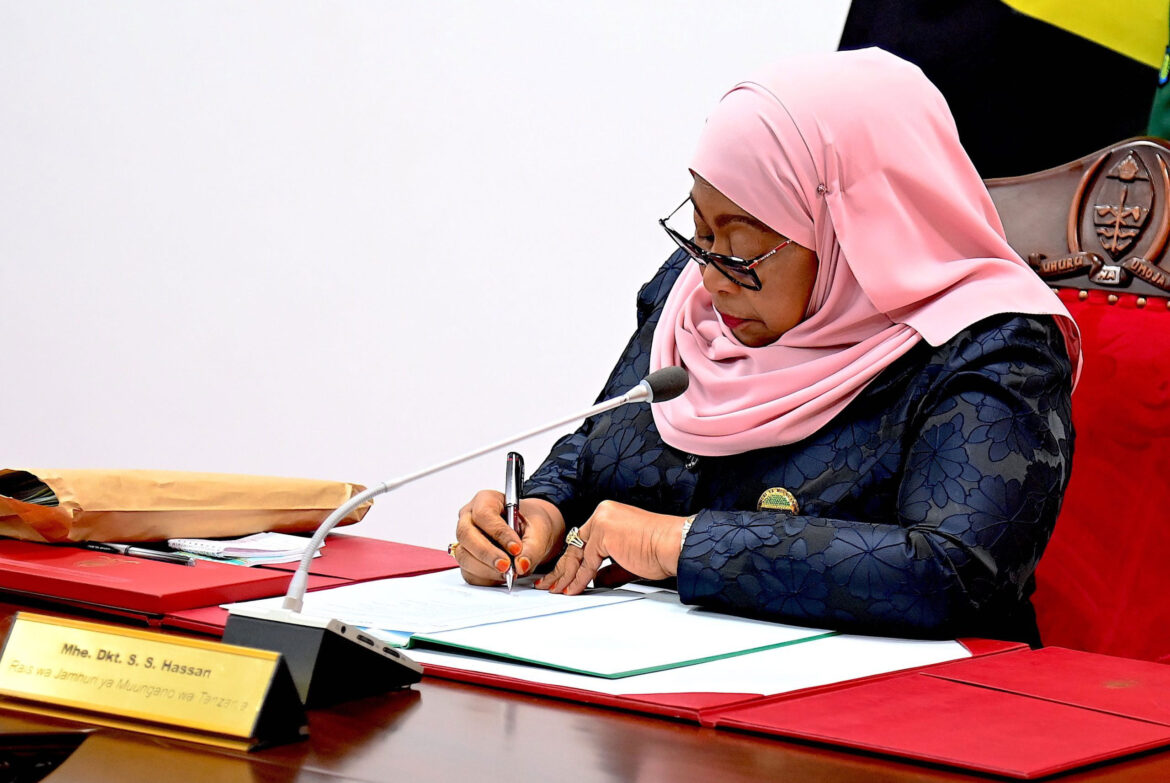
Waziri wa Nchi, Ofisi ya Rais, Menejimenti ya Utumishi wa Umma, Ridhiwani Kikwete, amesema Rais Samia Suluhu Hassan ametoa kibali cha kupandishwa madaraja watumishi wa umma 219,042 nchini, hatua inayolenga kuimarisha motisha na ufanisi katika utumishi wa umma.
Amesema hayo Mei 6, 2026 jijini Arusha wakati akifungua Mkutano wa Pili wa mwaka wa Jumuiya za Wataalamu wa Utawala na Usimamizi wa Rasilimali Watu katika Utumishi wa Umma (AAPAM), Tanzania.
Ridhiwani amewataka maafisa rasilimali watu kuhakikisha wanawasilisha taarifa kwa wakati pale wanapokutana na changamoto katika mchakato wa kupandisha madaraja ili kuepuka ucheleweshaji usio wa lazima.
Amesisitiza umuhimu wa kutenda haki kwa watumishi ili kufanikisha dhamira ya Rais ya kuboresha utendaji na kutoa huduma bora kwa wananchi.
Aidha, amewataka kushughulikia kwa wakati changamoto za barua za uhamisho pamoja na kufuata taratibu rasmi kabla ya kumwondoa mtumishi kazini.
Pia amesisitiza umuhimu wa utoaji wa ushauri nasaha kwa watumishi ili kulinda afya ya akili na kuongeza tija katika utendaji wa kazi.
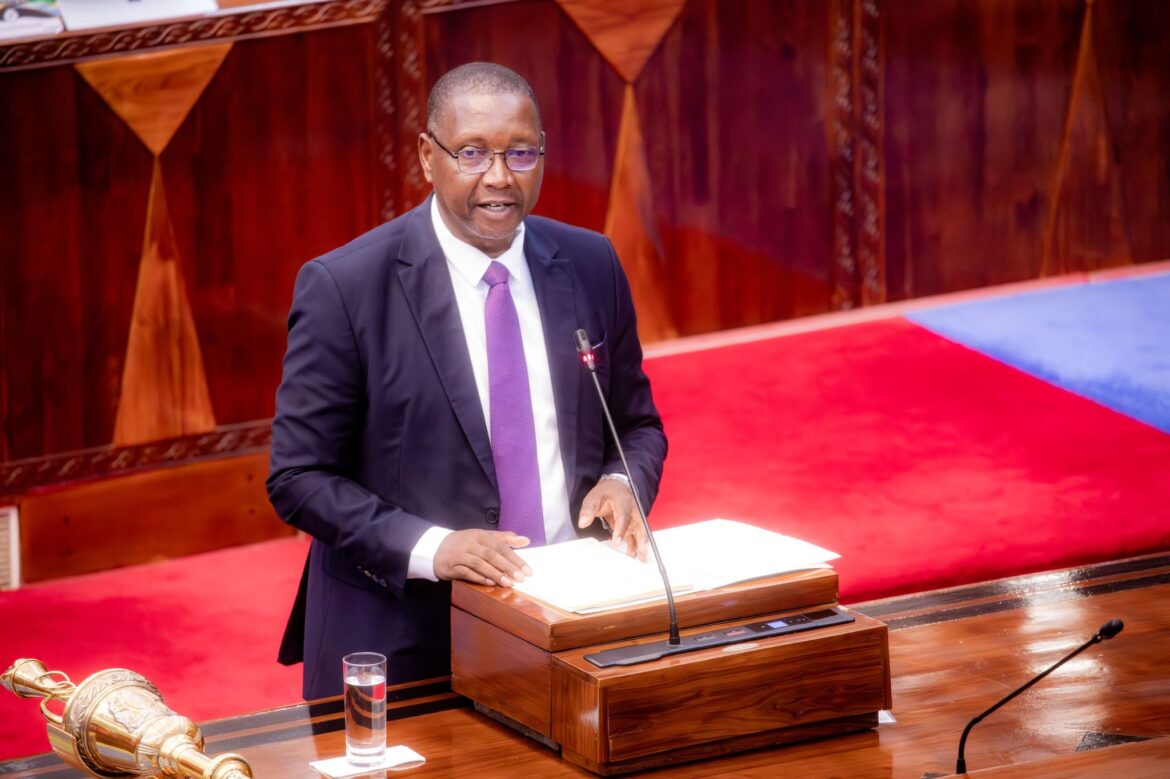
WIZARA ya Elimu,Sayansi na Teknolojia imepanga kuimarisha elimu ya ufundi na mafunzo ya stadi za kazi kwa kutangaza mpango wa kusajili jumla ya vyuo 263 vya mafunzo ya ufundi stadi.
Hatua hiyo inalenga kupanua wigo wa upatikanaji wa elimu ya ufundi nchini ili kuwafikia vijana wengi zaidi katika maeneo ya mijini na vijijini, kwa lengo la kuwaandaa na ujuzi unaohitajika katika soko la ajira.
Hayo yameelezwa jana bungeni na Waziri wa Wizara hiyo,Prof Adolf Mkenda wakati akiwasilisha mapato na matumizi ya Wizara hiyo Kwa mwaka wa fedha 2026-2027.
Waziri Mkenda alisema Serikali itasajili jumla ya vyuo 263 vya elimu ya ufundi na mafunzo ya ufundi stadi, hatua inayolenga kupanua wigo wa elimu ya ufundi katika maeneo mbalimbali ya nchi.
Alisema kati ya hivyo, vyuo vya elimu ya ufundi vitakuwa 45, huku vyuo vya mafunzo ya ufundi stadi vikifikia 1,066, na shule za sekondari za amali 267.
Prof Mkenda alisema usajili wa vyuo hivyo utaenda sambamba na uboreshaji wa miundombinu ya mafunzo na vifaa vya kisasa ili kuhakikisha wanafunzi wanapata elimu ya vitendo inayokidhi mahitaji ya sekta mbalimbali.
Aidha, mpango huo unatarajiwa kuongeza fursa za ajira, kujiajiri na kuchochea maendeleo ya uchumi wa viwanda kupitia nguvu kazi yenye ujuzi na ubunifu.