Historia
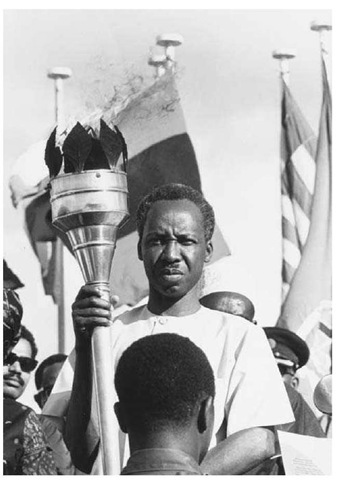
RAIS wa awamu ya kwanza wa Jamhuri ya Muungano wa Tanzania, Hayati baba wa Taifa Mwalimu Julius Kambarage Nyerere alizaliwa mwaka 1922 katika Wilaya ya Butiama Mkoa wa Mara, mnamo tarehe 14 Oktoba, 1999, aliaga dunia katika hospitali ya Mtakatifu Thomas jijini London nchini Uingereza.
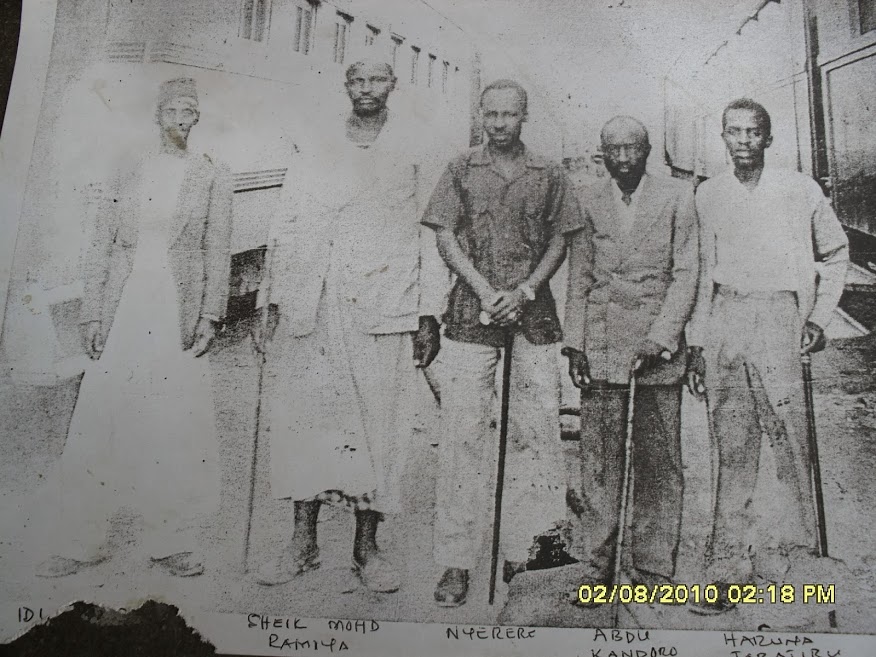
Katika uhai wake, alikuwa ni Mmalenga. Aliandika barua ya Kiserikali kwa mtindo wa utenzi, pia alijibiwa barua hiyo kwa mtindo wa utenzi na Nguli/Karii, Hayati Saadani Abdul Kandoro aliyekuwa Mkuu wa Wilaya ya Bagamoyo mwaka 1964.
“Huu ni utenzi ulioandikwa kwa njia ya barua iliyotungwa na Muheshimiwa Mtukufu mwalimu J.K. Nyerere, President wa TANU na Serikali. Aliniletea barua hiyo ili kunizungumza jinsi ya watu wanaopenda kujisaidia katika shughuli za maendeleo na jinsi ya kuwapa moyo dhidi ya adui wa jamii katika shughuli za vijiji.”- Hayati Saadani A. Kandoro
SHEIKH KANDORO, SIKIA!
1. Sheria husaidia,
Kuijenga Tanzania,
Siyo kazi ya sheria,
Nchi kutuharibia.
2. Kila nchi ina nia,
Inayoikusudia,
Vile vile ina njia,
Itakayoipitia.
3. Tanzania tuna nia,
Ya kujenga ujamia,
Na njia ya kupitia,
Ni wote kusaidia.
4. Kijiji cha turadhia,
Kisima kujipatia,
La magambo limelia,
Watu wakahudhuria.
5. Wakakubali kwa nia,
Kisima kujichimbia,
Aliyewakatalia,
Kukuye wakamlia.
6. Akenda kushtakia,
Kwa hakimu wa sheria,
Kwamba wamemuonea
Kuku wake kalmia.
7. Hakimu akasikia,
Akaita jumuia,
Wakaja akawambia,
Nyinyi wavunja sheria.
8. Basi nawahukumia,
Faini shilingi mia,
Na sabini za fidia,
Au jela kuingia.
9. Hakimu wakamwambia,
Itatushinda fidia,
Hata na faini pia,
Heri jela kuingia.
10. Wakafungwa kwa sheria,
Na maji wakamwachia,
Mwenye kuku kuumia,
Pamwe na Hakimu pia.
11. Huko ni kusaidia,
Adui wa jumuia,
Nasi kazi ya sheria,
Ila ya maharamia.
12. Kazi hasa ya sheria,
Kusaidia raia,
Sina nia kuwavunjia,
Wanapojisaidia.
“Huu ni utenzi niliandika kama barua ya kumjibu Mheshimiwa Mtukufu Mwalimu J.K. Nyerere President wa TANU kujibu utenzi wake alioniandikia juu ya wanaoharibu maendeleo ya kijiji katika kazi za jamii.”- Hayati Kandoro.
1. Labeka Mheshimiwa,
Julius msifiwa,
Kambarage muelewa,
Bwana nakuitikia.
2. Nakuitikia sheria,
Kwamba inasaidia,
Kuijenga Tanzania,
Na ni nguzo ya Dunia
3. Kutoheshimu sheria,
Huleta wingi udhia,
Amani ikapotea,
Nchi zikaangamia.
4. Ni msumeno sheria,
Mithali hii natia,
Haitaki kubabia,
Pendelea liso njia.
5. La mgambo likilia,
Watu wote hudhuria,
Kisima kujichimbia.
Hilo lataka sheria.
6. Kuna wavivu wa nia,
La mgambo likilia,
Nao anajikalia,
Huendi kuhudhuria.
7. Mfano huo hatia,
Wengine huufatia,
Na wao hujikalia,
Kazi zetu husinzia.
8. Kimila nimesikia,
Waweza kumsikia,
Kuku wake kujilia,
Lakini sio sheria.
9. Kwa kuwa sio sheria,
Mvivu hujishitakia,
Na walao huumia,
Pia hutozwa fidia.
10. Twazidi kukulilia,
Ifanywe hasa sheria,
By Law kuitia,
Yaweza kusaidia.
11. Yaweza kusaidia,
Kuku tukijilia,
Pasiwepo hata njia,
Mvivu kukimbilia.
12. Kuku tumejilia,
Pasiwe na kuponyea,
Hakimu kumuendea,
Kwamba alipwe fidia.
13. Mkazo twaukazia,
Bila nyuma kurudi,
Twataka kuendelea,
Kuinua Tanzania.
14. Taifa kuitikia,
Kazi kuzishangilia,
Ndilo tunalolilia,
Ndipo tunakazania.
15. Ndipo tuna kazania,
Na tena tuna kania,
Kuishangaza dunia,
Lengo letu kutimia.
16. Bila nguvu kuzitia,
Mkazo wa kisheria,
Unafaa kufatia,
Kazi zitaendelea.
Utii wa Sheria bila kushurutishwa:
Zanzibar: Miaka 54 iliyopita, Aprili 7, 1972, Rais wa Kwanza wa Zanzibar na Mwenyekiti wa Baraza la Mapinduzi, Sheikh Abeid Amani Karume aliuwawa kwa kupigwa risasi katika jengo la Makao Makuu ya Chama cha Afro-Shirazi hapo Kisiwandui mjini Zanzibar.
Dar es Salaam. Retired High Court judge Julie Manning, the first Tanzanian woman to hold the position, has died at the age of 87.
According to the Tanganyika Law Society (TLS), Judge Manning passed away on Friday, March 20, 2026, at Hitech Sai Health Centre in Upanga, Dar es Salaam, where she had been receiving treatment.
Family members are receiving mourners at her Oyster Bay residence in Kinondoni, as funeral arrangements continue.
Trailblazer in legal profession
Judge Manning is remembered as a pioneer who broke gender barriers in Tanzania’s legal profession and across East Africa.
Her academic journey began at Tabora Girls’ School before she made history in 1961 when she joined the Faculty of Law at the University of Dar es Salaam, then the first in East Africa.
She was the only woman among the first cohort of 13 students, becoming the first woman from Tanganyika and the region to study law.
Upon graduating in 1963, she became the first Tanzanian woman to earn a law degree. She later joined the Attorney General’s Chambers as a legislative drafter, the first woman in the country to hold that position.
In 1973, she was appointed High Court judge by founding President Julius Nyerere, becoming the first woman in Tanzania and East Africa to serve in the role.
Public service and leadership
In 1975, Judge Manning was appointed a Member of Parliament and later served as Minister for Legal Affairs, making her among the first women to hold a full Cabinet position in Tanzania.
She served in the role until 1983, playing a key part in strengthening the rule of law during the country’s formative years.
She later served as a commissioner with the National Electoral Commission and as a member of the Law Reform Commission.
In 2011, she was awarded a national medal by former President Jakaya Kikwete in recognition of her distinguished service.
Tributes pour in
Members of the legal fraternity have described her death as a great loss, noting her contribution to advancing women in law and public leadership.
Former Attorney General Andrew Chenge said Judge Manning will be remembered for her pioneering achievements, including being the first Tanzanian woman to obtain a law degree and to specialise in legislative drafting.
He described her as a highly skilled legal drafter and a dedicated public servant.
“Julie Manning will be remembered for her immense contribution to the legal profession and for championing gender equality,” he said.
Advocate Peter Madeleka said her legacy will endure through the many women she inspired to pursue legal careers.
“She paved the way for women in Tanzania to study and practise law with confidence,” he said.
Human rights activist Dr Ananilea Nkya said Judge Manning was a courageous defender of justice who championed the rights of all people without discrimination.
“She loved her country and stood firmly for justice,” she said.
Legal and Human Rights Centre executive director Dr Anna Henga said her passing leaves a significant gap in the justice sector.
“She broke gender barriers and demonstrated exceptional legal reasoning in her judgements,” she said.
A lasting legacy
Judge Manning is widely regarded as a symbol of integrity, professionalism and courage.
Her legacy, stakeholders say, will continue to inspire generations of women in Tanzania and beyond to pursue careers in law and leadership.
Tanzania yatimiza maono ya Mwalimu Nyerere ya kuwa na Makao Makuu ya Ulinzi wa Taifa
Tanzania leo imeandika historia kubwa ambapo kwa mara ya kwanza imekuwa na Makao Makuu ya Ulinzi wa Taifa, ambapo ni ofisi za Jeshi la Ulinzi la Wananchi wa Tanzania (JWTZ) na ofisi za Wizara ya Ulinzi na Jeshi la Kujenga Taifa zitakazokuwa sehemu moja jambo ambalo ni muhimu katika kuimarifa ufanisi wa kazi.
Jengo hilo lililozinduliwa leo Kikombo mkoani Dodoma limehitimisha safari iliyoanza mwaka 1964 ambapo wazo la kuwa na Makao Makuu ya Ulinzi wa Taifa lilitolewa wakati jeshi hilo likiundwa.
Safari hiyo iliendelea na miaka 10 baadaye, mwaka 1974, wazo la kuwa na Makao Makuu ya Ulinzi wa Taifa liliingizwa kwenye Mpango Kazi wa jeshi. Kutokana na changamoto za kifedha na Vita vya Kagera, jengo hilo halikujengwa na ilipofika mwaka 2014 ilipitishwa kuwa lijengwe ilipo Kambi ya Lugalo, Dar es Salaam, na jiwe la msingi liliwekwa tayari ujenzi kuanza.
Hata hivyo, baada ya kuingia madarakani kwa Serikali ya Awamu ya Tano, mpango wa serikali kuhamia Dodoma ukapata msukumo mpya, hivyo ikaelekezwa kuwa jengo hilo lijengwe Dodoma. JWTZ ilihamia Dodoma na kuwa ofisi za muda Msalato, huku wizara ikiwa katika Mji wa Serikali.
Mwaka 2019, Rais wa Awamu ya Tano, Hayati Dkt. John Pombe Magufuli aliweka jiwe la msingi la ujenzi wa ofisi hizo katika Kijiji cha Kikombo, na ujenzi ulianza rasmi mwaka 2020.
Miaka sita baadaye tangu kuanza kwa ujenzi, na miaka 62 tangu kutolewa kwa wazo hilo, Rais Dkt. Samia Suluhu Hassan leo amezindua awamu ya kwanza ya Makao Makuu ya Ulinzi wa Taifa ambayo imejengwa na watalaamu wa ndani kwa thamani ya shilingi bilioni 121 (majengo, miundombinu na samani).
Akifungua jengo hilo Dkt. Samia amesema uwekezaji katika miundombinu ya ulinzi ni sehemu ya msingi ya kulinda heshima ya Taifa, amani ya nchi na mafanikio ya maendeleo ya kiuchumi na ametaka ofisi hizo zitumike kama kitovu cha uratibu wa kimkakati, uchambuzi wa kitaalamu na usimamizi wa kisasa wa shughuli za ulinzi wa Taifa.
Awamu ya pili na ya tatu zitakazohusisha ofisi na majengo ya makazi zinatarajiwa kuanza pindi taratibu za maandalizi zitakapokamilika ambapo zitagharimu shilingi bilioni 107.6 na shilingi bilioni 90.1, mtawalia.
Tanzania-India relations: From post-colonial solidarity to economic powerhouse
Dar es Salaam. The diplomatic bond between Tanzania and India is a storied narrative spanning over six decades.
Rooted in a shared history of colonial struggle, the relationship has evolved from a mutual quest for sovereignty into a strategic partnership defined by massive economic potential.
As India’s global influence surges, Tanzania finds itself at a crossroads where historical sentiment must meet modern economic pragmatism.
The seeds of this partnership were sown even before Tanganyika’s independence. Under its first Prime Minister, Jawaharlal Nehru, India opened its embassy in Dar es Salaam in November 1962.
This early gesture laid the groundwork for a relationship that expanded significantly following the 1964 union of Tanganyika and Zanzibar.
The ideological alignment between the Father of the Nation, Mwalimu Julius Nyerere, and Mr Nehru was profound.
Both leaders championed the separation of religion from politics, campaigned tirelessly against all forms of discrimination, and stood as a united front against the vestiges of colonialism and the inequities of the global South.
A legacy of high-level diplomacy
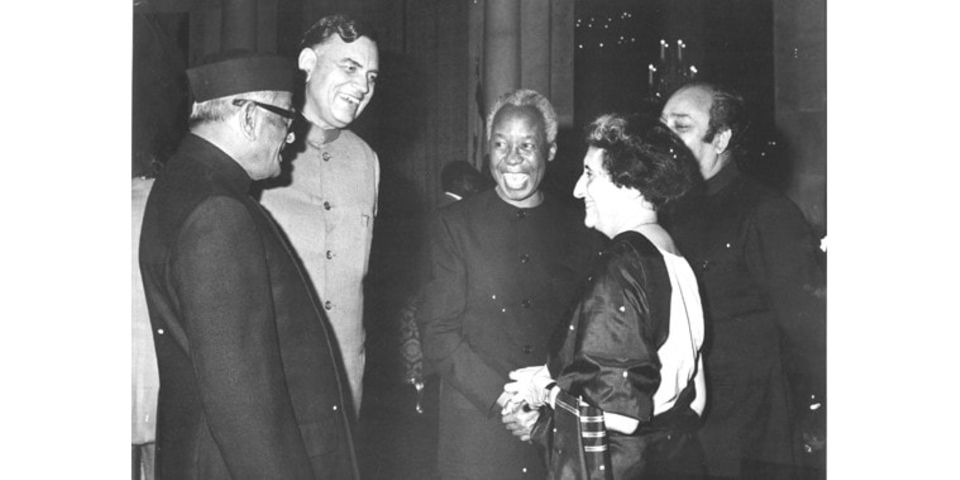
This mutual respect was cemented through frequent high-level state visits. Mwalimu Nyerere visited India seven times during his presidency (1971, 1976, 1981, 1982, 1983, 1984, and 1985).
Subsequent Tanzanian leaders followed suit: Mr Ali Hassan Mwinyi visited twice (1989 and 1993), Mr Benjamin Mkapa in 2002, and Mr Jakaya Kikwete in 2008 and 2015.
Notably, every Tanzanian Head of State has visited the Asian giant, except the late Dr John Magufuli. India has consistently reciprocated this interest.
From President V.V. Giri in 1972 to Prime Minister Narendra Modi in 2016, a steady stream of Indian dignitaries has graced Tanzanian soil, reinforcing bilateral ties.
Recognition of Tanzania’s leadership was also formalised through prestigious international awards; Mwalimu Nyerere received the Jawaharlal Nehru Award for International Understanding in 1974 and the Gandhi Peace Prize in 1995 for his role in achieving independence and regional stability without bloodshed.
A shifting global paradigm
Whereas the 1960s through the 1980s were marked by a shared struggle against Western imperialism, the third decade of the 21st century presents a markedly different landscape.
India is no longer merely a “developing partner” but a rising, prosperous global titan.
According to projections by PricewaterhouseCoopers (PwC), the global economic hierarchy is set for a dramatic shift.
By 2050, Western dominance is expected to wane, with China and India projected to take the first and second spots, respectively, in terms of global economic size (GDP at PPP).
Currently, International Monetary Fund (IMF) data places India as the world’s fifth-largest economy, trailing only the US, China, Japan, and Germany.
However, when measuring Purchasing Power Parity (PPP), the IMF recognises India’s rapid ascent as already closely following China.
PwC forecasts that by 2050, the “E7” (emerging economies) will dominate the global stage. The projected top five, China, India, the US, Indonesia, and Brazil, highlight a world where Tanzania’s traditional allies in the West will share the stage with rising giants in the East and South.
The Indian opportunity for Tanzania
For Tanzania, the message is clear: the country must deepen its engagement with these emerging powers while maintaining strong relations with traditional partners such as the UK, US, and Japan. India offers a particularly compelling blueprint for socio-economic development.
As the world’s most populous nation, surpassing 1.4 billion people in April 2023, India is lifting an average of 130 million citizens into the middle class every decade.
A World Bank report further identifies India as the world’s sixth-largest buyer of raw materials, presenting a massive, hungry market for Tanzanian agricultural and mineral exports.
Beyond trade, Tanzania stands to gain from India’s “knowledge of transformation.”
If India can lift hundreds of millions out of poverty while maintaining its status as the world’s largest democracy, Tanzania, with a population of approximately 62 million, has every reason to believe it can eliminate extreme poverty within a few decades by adopting similar digital and industrial strategies.
Looking ahead to 2050
The geographical proximity, with only the Indian Ocean separating the two nations, makes India a “natural neighbour” for the East African Community (EAC) powerhouse.
As India approaches its global economic peak over the next 30 years, Tanzania must ensure its own development goals are tethered to this promising trajectory.
By aligning its diplomatic and economic policies with the realities of the 2050 forecast, Tanzania can transition from a historical ally to a modern partner in prosperity.
The focus must shift toward technology transfer, healthcare collaboration, and industrial processing to ensure that the next 60 years of the relationship are as productive as the first 60 were.
Nguli wa muziki nchini Tanzania na mtunzi wa wimbo maarufu wa “Tanzania Yetu,” Mzee Steven Hiza amefariki dunia Februari 16 mwaka huu.
Taarifa ya Katibu Mkuu wa Chama cha Muziki wa Rhumba Tanzania, Hassan Msumari imeeleza kuwa Mzee Hiza alifariki jana jioni Mwanzange, Tanga na kwamba taarifa za mazishi zitatolewa.
Mzee Hiza, ambaye alikuwa na Atomic Jazz Band, anakumbukwa kwa mchango wake mkubwa katika tasnia ya muziki wa kizalendo, hususan kupitia wimbo huo uliotungwa takribani miaka 60 iliyopita na ambao umeendelea kuipamba nchi katika hafla mbalimbali za kitaifa, kuelimisha kizazi hadi kizazi na kuhamasisha uzalendo miongoni mwa Watanzania.
Mbali na “Tanzania Yetu,” Mzee Hiza alikuwa mtunzi na mwalimu wa muziki aliyeshiriki kukuza vipaji vya vijana na kuendeleza muziki wa maadili na mafunzo.
Kazi zake zimekuwa sehemu ya urithi wa utamaduni wa taifa, zikichangia kuimarisha utambulisho wa Tanzania kupitia sanaa.
Kwa nyakati mbalimbali serikali imeonesha kutambua mchango wake katika muziki ambapo mwaka 2024 Rais Samia Suluhu Hassan alimpatia zawadi ya shilingi milioni 50.
Tanzania ni Jamhuri ya muungano iliyoundwa baada ya Tanganyika na Zanzibar kuungana mwaka 1964. Lakini ni taifa lenye historia ndefu. Haya ni baadhi ya matukio makuu historia ya taifa hili.
1498 – Mreno Vasco da Gama afika pwani ya Tanzania.
1506 – Wareno wafanikiwa kudhibiti maeneo karibu yote ya pwani ya Afrika Mashariki.
1699 – Wareno wafurushwa kutoka Zanzibar na Waarabu kutoka Oman.
1884 – Shirika la German Colonisation Society lililoanzishwa na Mjerumani Carl Peters laanza kuchukua umiliki wa maeneo Tanzania bara.
1886 – Uingereza na Ujerumani zatia saini mkataba wa kuruhusu Ujerumani kudhibiti maeneo ya Tanzania bara ila tu ukanda mwembamba maeneo ya pwani ambao unasalia chini ya sultani wa Zanzibar. Zanzibar yaendelea kuwa nchi lindwa ya Uingereza.
1905-06 – Wapiganaji wa Maji Maji washindwa na wanajeshi wa Ujerumani.
Kutawaliwa na Uingereza
1916 – Wanajeshi wa Uingereza, Ubelgiji na Afrika Kusini washinda wanajeshi wa Ujerumani wakati wa Vita Vikuu vya Kwanza vya Dunia na kukalia Afrika Mashariki ya Kijerumani. (Eneo la Afrika Mashariki ya Kijerumani lilijumuisha Tanganyika na Rwanda na Burundi).
1919 – Muungano wa Mataifa waiteua Uingereza kuwa mdhamini wa Tanganyika – ambayo sasa ndiyo Tanzania bara.
1929 – Chama cha Tanganyika African Association (TAA) chaanzishwa.
1946 – Umoja wa Mataifa wabadilisha idhini ya Uingereza Tanganyika kutoka kwa mdhamini hadi kuwa mlezi.
1954 – Julius Nyerere na Oscar Kambona wabadilisha chama cha Tanganyika African Association kuwa Tanganyika African National Union (TANU).
Uhuru
1961 – Tanganyika yajipatia uhuru Julius Nyerere akiwa waziri mkuu.
1962 – Tanganyika yawa jamhuri Nyerere akiwa rais.
1963 – Zanzibar yajipatia uhuru wake.
1964 – Sultani wa Zanzibar apinduliwa na chama cha Afro-Shirazi Party kwenye mapinduzi ya mlengo wa kushoto yaliyokuwa na ghasia; Tanganyika na Zanzibar zaungana na kuwa Jamhuri ya Muungano wa Tanzania, Nyerere akiwa rais wa jamhuri hiyo mpya na kiongozi wa serikali ya Zanzibar na kiongozi wa chama cha Afro-Shirazi Party, Abeid Amani Karume, akiwa makamu wa rais.